TRAI DLT registration for bulk SMS, step by step
Every business that sends commercial SMS in India has to register on the DLT platform first. Here is exactly what DLT is, the four things you register, the new traceability and header-suffix rules for 2025-26, and how SmsHorizon does the paperwork for you, free.
What is DLT registration?
DLT stands for Distributed Ledger Technology. It is a blockchain-based registration system that TRAI introduced under the Telecom Commercial Communications Customer Preference Regulations (TCCCPR) to stop spam and unregistered senders. Every business that wants to send commercial SMS, OTPs or promotions registers itself, its sender IDs and its message templates on a DLT portal run by the telecom operators.
The rule is simple: no DLT registration, no delivery. Application-to-person (A2P) SMS that is not tied to a registered entity, header and template is scrubbed and blocked by the operators before it reaches a handset. So whether you send one OTP a day or a million offers a month, DLT registration comes first.
You register once on any one operator's portal (Jio, Airtel, Vi or BSNL), and the registration is shared across all networks. SmsHorizon registers and manages this for you at no cost, but it helps to understand what is happening under the hood.
The four things you register

DLT registration is not a single form. It is four linked registrations, done in order:
- Entity (Principal Entity) registrationYou register your business and complete KYC. You receive a unique Principal Entity ID (PE ID) that identifies you on every network. This is the one-time step that proves who you are.
- Header (sender ID) registrationYou register the 6-character sender IDs that appear in place of a phone number, such as MYSHOP or AD-HORIZN. Each header is tied to a category, and from May 2025 carries a category suffix (see below).
- Content template registrationYou register the exact text of each message, with variable fields written as {#var#}. Every content template must contain your brand name, and any links or numbers inside it must be whitelisted.
- Consent template registrationFor promotional messages, you register how and where customers opted in. This proves you have permission before you market to a number.
Once all four are approved, your messages are matched in real time against your registered header, template and consent on every send. A message that matches is delivered in seconds; a mismatch is blocked.
Documents you need
Keep this KYC set ready before you start. The same documents work across all the operator portals:
- PAN of the business (or the proprietor's PAN for a proprietorship)
- GST, TAN or CIN as business proof
- Authorised-signatory ID (Aadhaar, PAN or passport)
- Letterhead or authorisation letter on company stationery
- A working email and mobile number for OTP verification
Sender IDs and the new -P / -S / -T / -G suffixes

A sender ID, or header, is the 6-character name that shows in place of a mobile number. Headers are registered by category, and from 6 May 2025 TRAI requires every header to carry a category suffix so the message type is visible and traceable:
- -P for promotional messages (offers, discounts)
- -S for service messages (account updates, alerts)
- -T for transactional messages (OTPs, banking)
- -G for government messages
A header registered in one category cannot be used to send another category's templates. Using a -P promotional header for an OTP, for example, is blocked. Choose the right category for each header up front, and register separate headers if you send across categories.
Content categories at a glance
Each content template is registered under one of these categories, which decides where and when it can be sent:
| Category | Used for | Reaches DND? |
|---|---|---|
| Transactional | OTPs and banking one-time alerts | Yes, all numbers, 24x7 |
| Service (implicit) | Order, delivery and account updates on an existing transaction | Yes, all numbers, 24x7 |
| Service (explicit) | Service messages a customer opted in to receive | Non-DND or opted-in |
| Promotional | Offers, discounts and marketing | Non-DND, 10am to 9pm window |
Traceability: the telemarketer chain
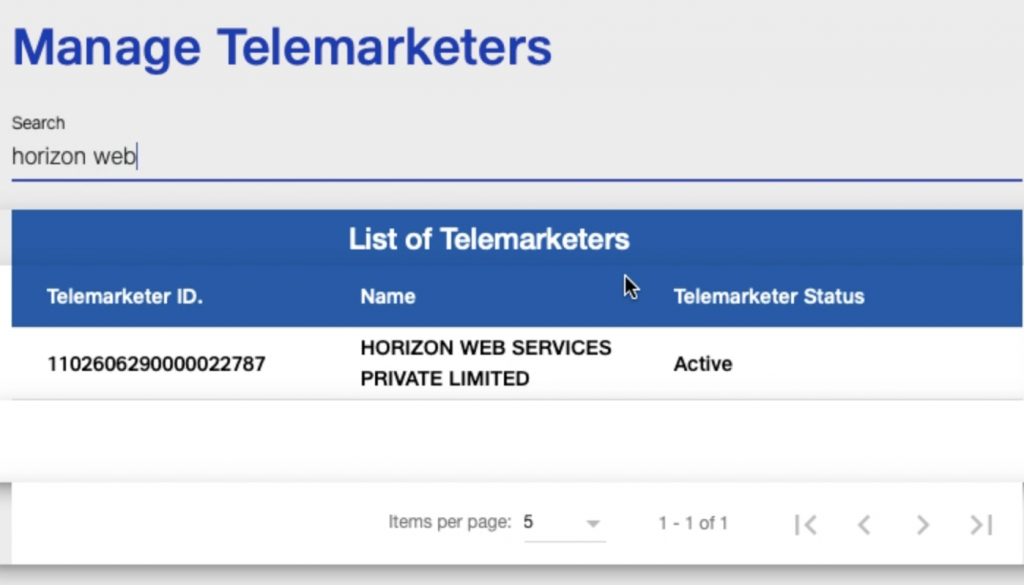
Since 11 December 2024, TRAI mandates full message traceability. Every commercial SMS must carry a complete, declared chain from the Principal Entity through each telemarketer and aggregator down to the delivering operator. If that chain is undefined or does not match what is registered, the operator rejects the message before it is delivered.
In practice this means your messaging partner must be a registered telemarketer with the chain declared correctly. SmsHorizon is a registered telemarketer, so when you send through us the chain is built and declared for you, and your traffic stays deliverable under the new rules.
Whitelisting links and numbers
A further 2025 rule: any URL, OTT or app link, APK link or callback number that appears inside a template variable must be pre-whitelisted on the DLT portal. Operators check variable fields against this whitelist, and a message that carries an un-whitelisted link or number is blocked. Register every link and number you intend to send when you register the template, and add new ones before you use them.
How SmsHorizon does it for you
DLT registration has a lot of moving parts, and a single mismatch silently blocks delivery. That is why we handle the whole process at no cost when you sign up:
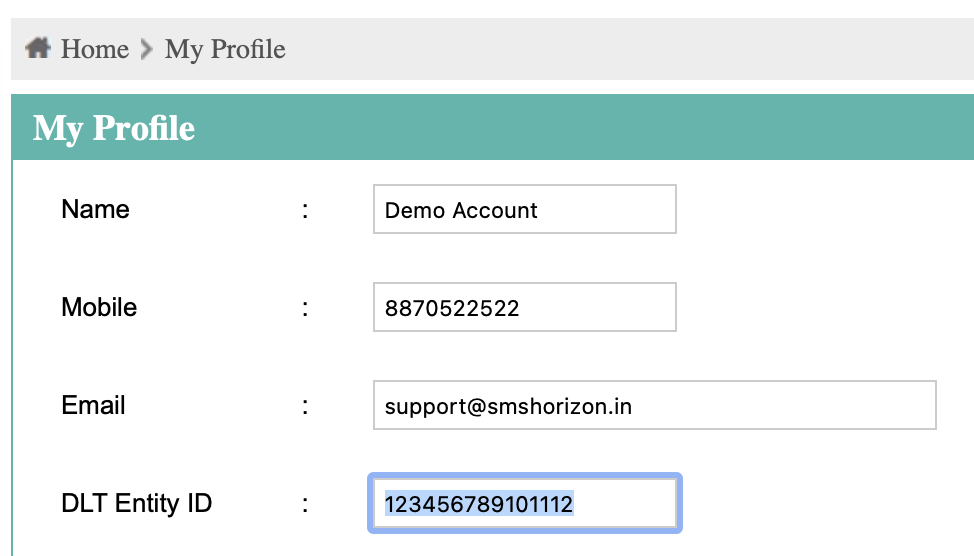
- We register your entity and obtain your PE ID.
- We help you pick and register headers in the right categories with the correct suffixes.
- We draft and submit your content and consent templates, with your brand name and variables in place.
- We whitelist your URLs and callback numbers.
- We declare the telemarketer chain so your traffic is traceable and compliant.
Once you are live, every message you send is DLT-compliant by default, reaching all numbers for transactional traffic and the right opted-in audience for promotional campaigns. See how to choose a sender ID and the difference between promotional and transactional SMS for the next steps.
DLT registration, common questions
What is DLT registration and is it mandatory?
What documents do I need for DLT entity registration?
How long does DLT registration take?
What are the new -P, -S, -T and -G header suffixes?
What is the message traceability chain?
Do I have to whitelist URLs and phone numbers in my templates?
Does SmsHorizon help with DLT registration?
Related guides

We will register your DLT, free
Sign up and our team handles entity, header and template registration for you. Get 500 free SMS credits to start.
Questions on DLT?
Talk to a real human, no bots.